
How your program gets designed
There is no class schedule here.That’s the point.
This is personal training for your pickleball game. There’s one product — your program — made to order from your intake, your baseline assessment, and your calendar. Individual or group, 4 to 8 weeks, built around what your game actually needs.
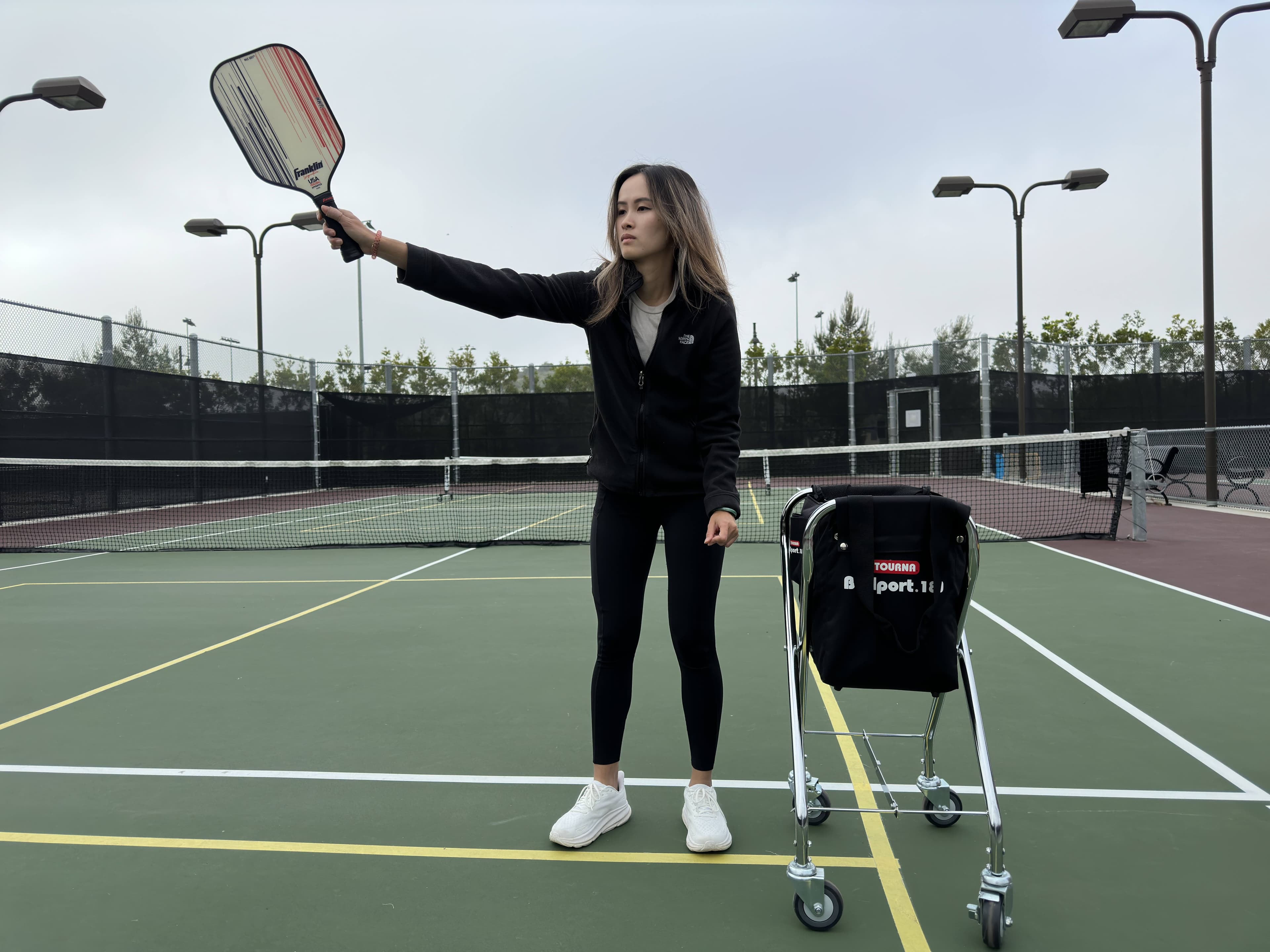
A class teaches the room.A program teaches you.
I taught group classes for four years. Here’s what I learned.
A class teaches the room, and the room isn’t you.
The strong coast. The struggling drown. The middle marks time.
So I stopped teaching rooms. I build programs for one game: yours.
A made-to-order program starts from the opposite end: what do you need, and what’s the shortest honest path to it? Your third shot might need three weeks of focused work while your dinks need none. A class can’t make that call. A program can.
No standing classes
- A class...
- teaches the average player in the room
- A program...
- is built from your baseline, week by week
- The difference is
- measured, not marketed
Who we coach
Five chapters of a playing life.Find yours.
One product, every chapter: a program made to order for the player in front of me — named for where the game meets your life, not for your birthday. The ages are approximate; nobody’s checking IDs at the gate. Here’s what usually brings each player through the door, and what we go after once they’re in.
The Spark — around 6–12
You're not signing your kid up for pickleball. You're signing up to find out if this is the thing that finally sticks. So it's safe, it's silly, and every fundamental is smuggled inside a game — because a kid who's laughing is a kid who's learning, and a kid who's learning doesn't quit in a month.
What we usually chase:
- Fundamentals hidden inside games they'll beg to replay
- Focus and coordination that show up off the court too
- Sportsmanship — winning well, losing better
- A first friendly tournament, when they're ready to be brave
The Fire — around 13–17
Your teen doesn't want 'exposure to a lifelong sport.' They want to be good. Good enough to compete, keep up with their friends, and never be the one getting hidden in doubles. We train them like that matters — because to them, it's everything.
What we usually chase:
- Real competitive skill, not participation-trophy reps
- Tournament and DUPR play with an actual plan behind it
- Athletic confidence that follows them everywhere
- A lane to serious play, if that's where this goes
The Juggle — around 18–49
You've got four spare hours a week and a plateau you've been living on since last summer. You don't need more court time. You need court time that moves a number.
What we usually chase:
- Break the plateau — on purpose, not by accident
- Win your rec league instead of narrating it
- A DUPR that finally moves
- Fitter, without a treadmill in sight
- Hold your own when family and friends start talking trash
The Craft — around 50–64
You're the competitive heart of this sport and you know it. The job now isn't slowing down — it's getting smarter faster than the field gets younger. Strategy over sprints. Wins over warm-ups.
What we usually chase:
- Compete — and place — in your bracket
- Out-think the younger legs across the net
- Training that respects your body — smart loads, smarter progressions
- Climb DUPR with a game built to last
- Play for decades, not seasons
The Wisdom — 65 and up, roughly
Keep playing. Keep moving. Keep your Tuesday group. I coach this level safety-first: smart progressions, drills chosen with your body in mind, and a plan whose whole job is keeping you on the court.
What we usually chase:
- Balance and footwork you can trust
- A soft game so sharp nobody makes you run — dinks, resets, patience
- Mobility that carries into the rest of your week
- The social side — that's half the sport, and you know it
Don’t see yourself yet? That’s the whole point of made-to-order — design your program and I’ll build it around you.
Ability, handled
Don’t tell me your level. I’ll measure it.
Notice what’s missing from this page: a menu of levels. You don’t pick your level off a wall — the $49 baseline assessment places you on the continuum, in numbers, and your program is built to move you one honest notch up. Not two. Not “to the next level.” One measurable notch — then we re-measure and decide the next one together.
Adaptive →
A full level of the continuum, not a footnote. Coaching built around how you play — it even has its own front door.
Beginner
Zero to rally-ready, every rule explained before it's enforced.
Intermediate
You can play. Now we find exactly why you're stuck.
Advanced
Small margins, measured ruthlessly.
From first message to measured progress.
Five steps, always in this order, always coach-approved before anything reaches you.
Intake
A short questionnaire about your goals, history, and schedule. Free, about five minutes.
AI-drafted, coach-designed proposal
I use AI to draft a first-pass program structure from your intake. Then I personally edit, shape, and approve every detail before you ever see it.
Baseline assessment
One on-court session. Your game scored across ten skill dimensions, with a written report — your starting line.
Program block
A 4–8 week block, individual or group, built around what your baseline says you need — not a generic curriculum.
Re-measure
We re-assess at the end of the block. You see the trend lines and know, in numbers, what moved.
A note on how the sausage is made: I use AI to help draft program structures from your intake and baseline — it’s good at the first pass. But I design, edit, and approve every program personally before you ever see it. Nothing reaches you that I haven’t shaped. You’re hiring a coach, not an algorithm.
The Lab
Your program is yours.The Lab is ours.
The program is personal training — built for your game and nobody else’s. But you don’t train in a vacuum. Joining means joining a crew: connections, play pals at your level, and member court time on the city courts I reserve.
Small on purpose, so it actually feels like a club and not a queue. That’s the part a solo lesson can never give you.
What comes with your seat
- Play pals matched to your level — people to actually rally with
- Member court time on our reserved city courts, for unsupervised fun plays
- Mini-tournaments and round-robins, capped small and close
Built from data, designed by a coach.
Every program is assembled from three inputs.
Your intake
Free · about 5 minutes
Goals, history, constraints, availability. This is where you tell me what you’re actually trying to do — win your league, keep up with your kids, finally beat the couple next door.
Your baseline
$49 · one on-court session
Scores your game across ten skill dimensions and produces a written report. It tells us where the real gaps are — which are often not where players think they are.
The drill library
Years of coaching, structured
A working library of drills and methods, each tagged by skill, level, and purpose. Your program pulls from it deliberately — every session maps to a dimension we’re trying to move.
One player or your whole crew.
Individual programs
You and me, working a plan. Best for plateau-breaking, adaptive coaching, and anyone who wants the full weight of the assessment behind their sessions.
Group programs
Two to six players who want to improve together — a family, a regular foursome, a group of friends. One shared program, adjusted per player, scheduled around your lives. Often the best value per player.
Four to eight weeks, with a finish line.
A program block runs 4 to 8 weeks depending on the goal. Each block has named focus areas, measurable milestones, and a re-assessment at the end. Programs start at $180/mo — your exact number is finalized in your proposal, after the assessment.
Illustrative example — an 8-week individual block
Sample only, not a real clientBaseline review + priority setting
Translate the assessment report into a working plan — which dimensions move first and why.
Third shot decision-making
Drill sequences targeting drop consistency and the drive-vs-drop read under pressure.
Third shot, continued
Add movement patterns and transition footwork so the shot holds up in live points.
Dinks under pressure
Sustained dink rallies with intentional resets — building patience before the put-away.
Resets + defensive volleys
Live-ball reset drills against pace, paired with volley footwork at the kitchen line.
Strategy + court movement
Doubles positioning, stacking, and closing-the-middle patterns under game conditions.
Live-play integration
Full games with targeted coaching pauses — applying every dimension worked so far.
Re-assessment
Full ten-dimension re-score, written report, and the conversation about what's next.
When one block ends, you’ll know exactly what the next one should be, or whether you need one at all.